Issue Types
Introduction
Path: Admin > Service Desk > Issue Types
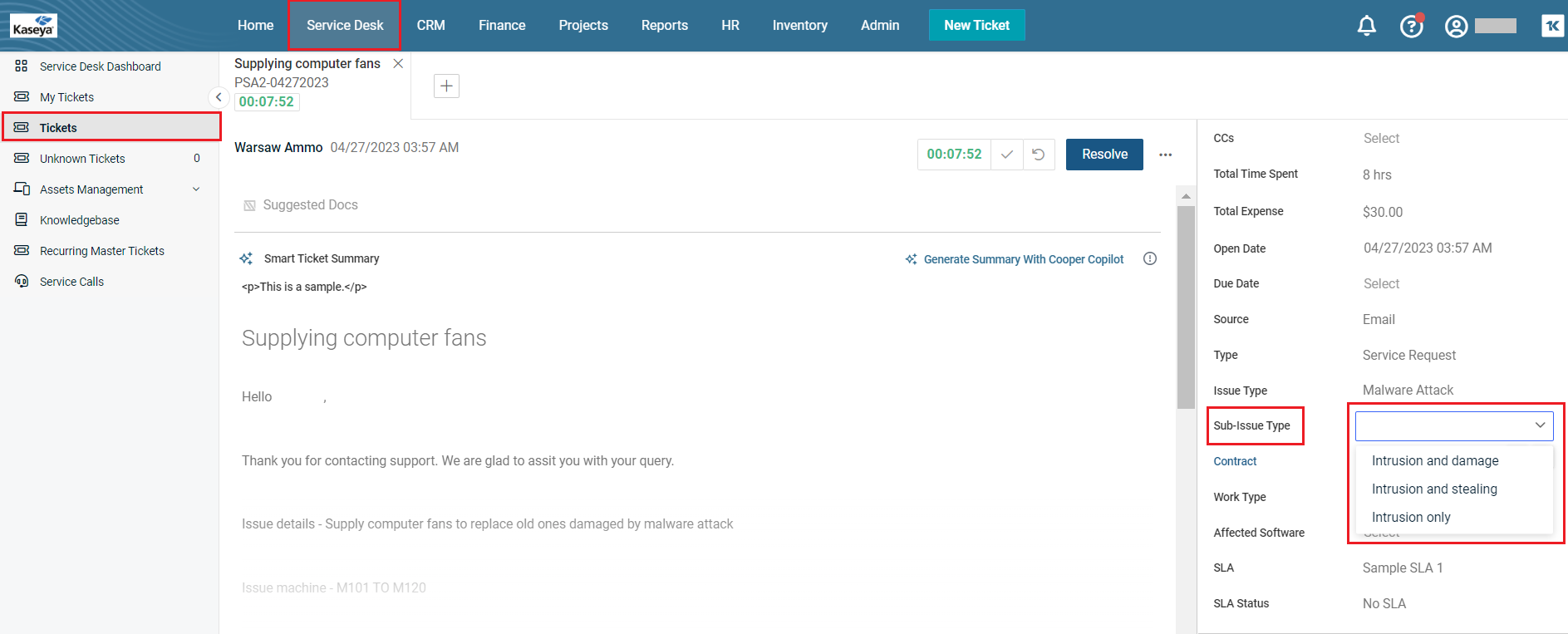
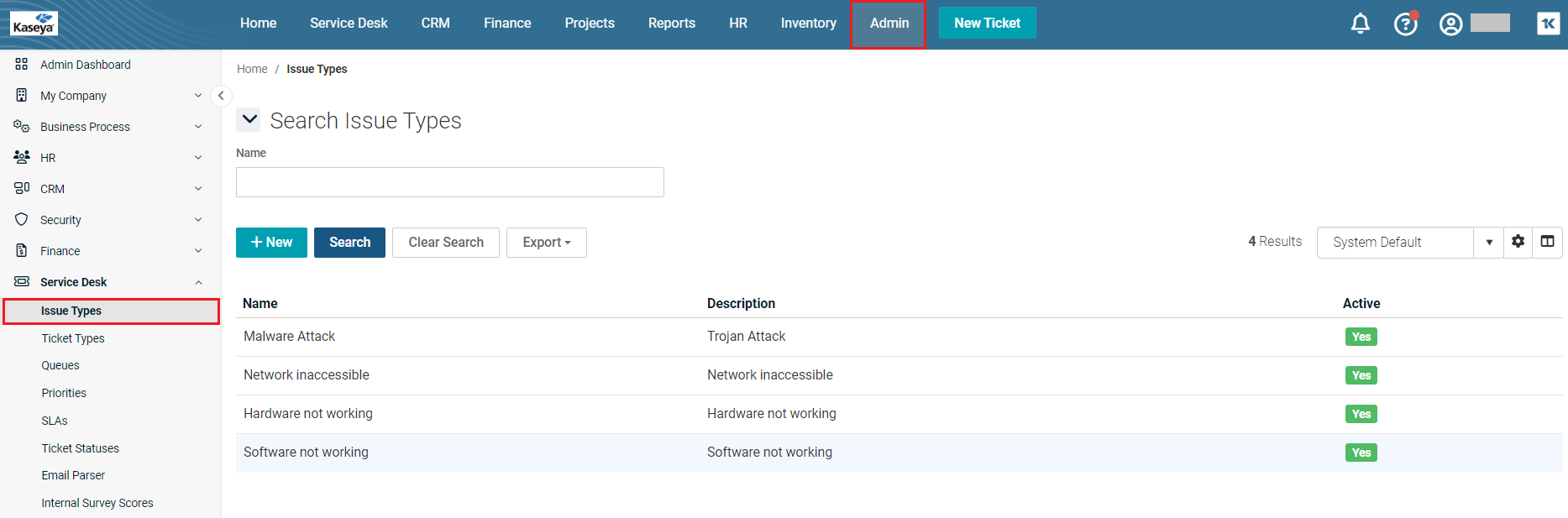
An issue type is a classification of an issue that a technician selects during the creation or update of a ticket. The Issue Types page maintains a list of issue types. Once you create an issue type with this page, it will appear under Service Desk > Tickets > New Ticket > Ticket Details section > Issue Type dropdown. You can see existing issue types in the Issue Types page. This page is also called Issue Types listing page.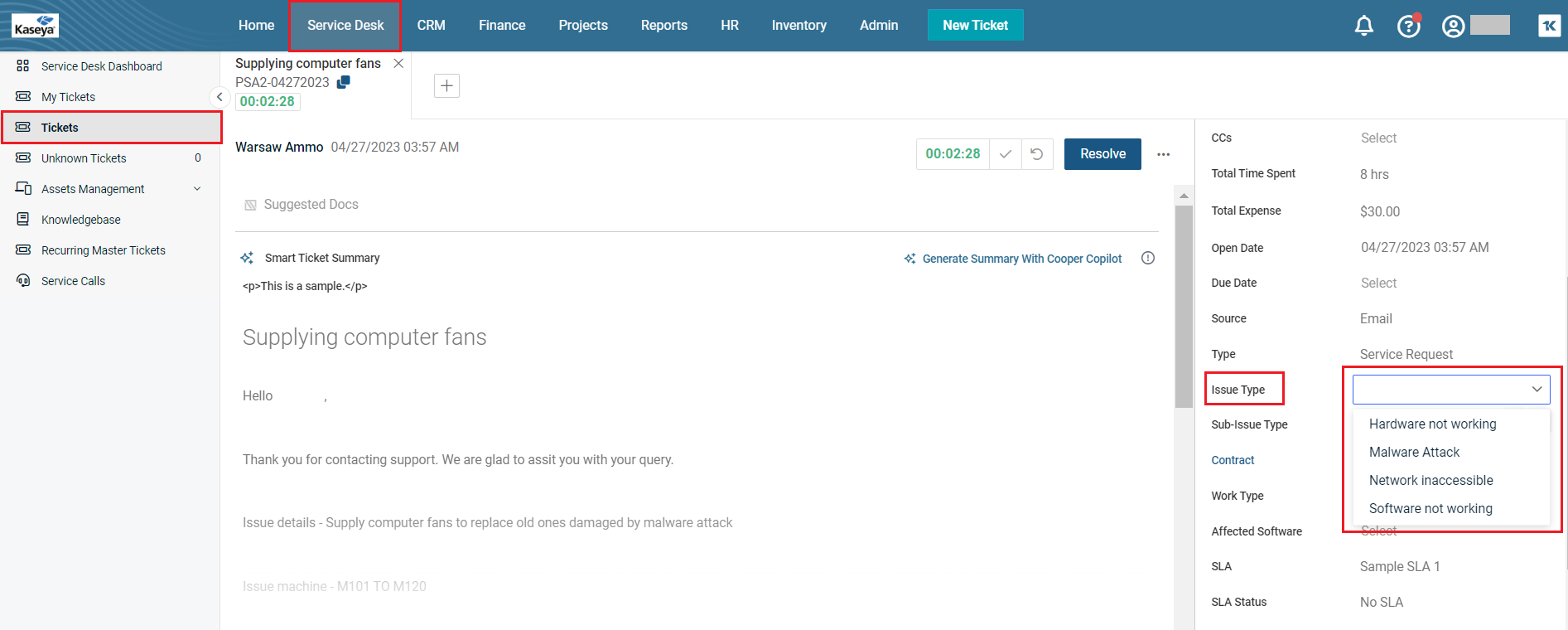
Searching for an issue type
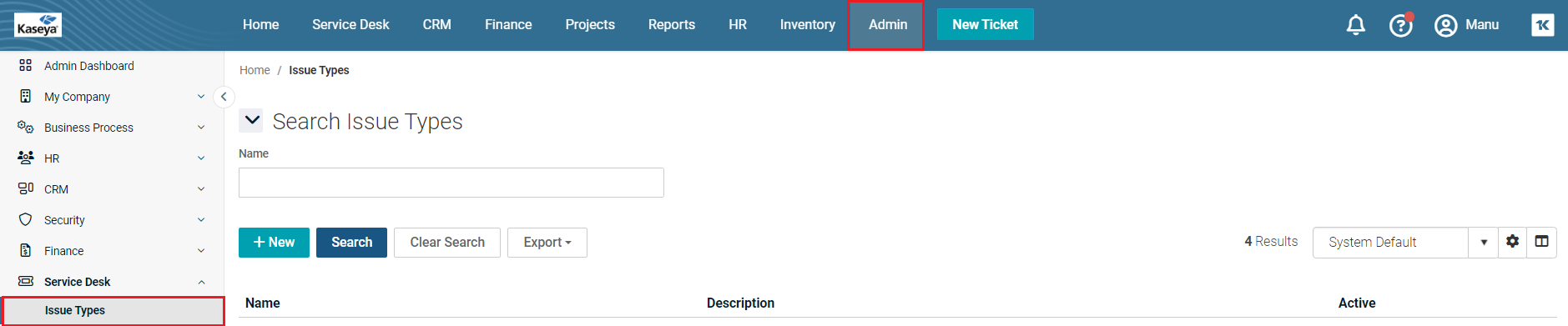
You can search for an issue type using the Name search criterion.
-
Navigate to Admin > Service Desk > Issue Types. The Issue Types page opens.
-
Name: Enter the name or the first few letters of the name of the issue type that you wish to search for.
-
Click Search. The search results will be displayed. To clear the search results, click Clear Search.
Creating an issue type (and an issue sub type)
You have the option of creating just an issue type or an issue type and am issue sub type at the same time.
-
Navigate to Admin > Service Desk > Issue Types. The Issue Types page opens.
-
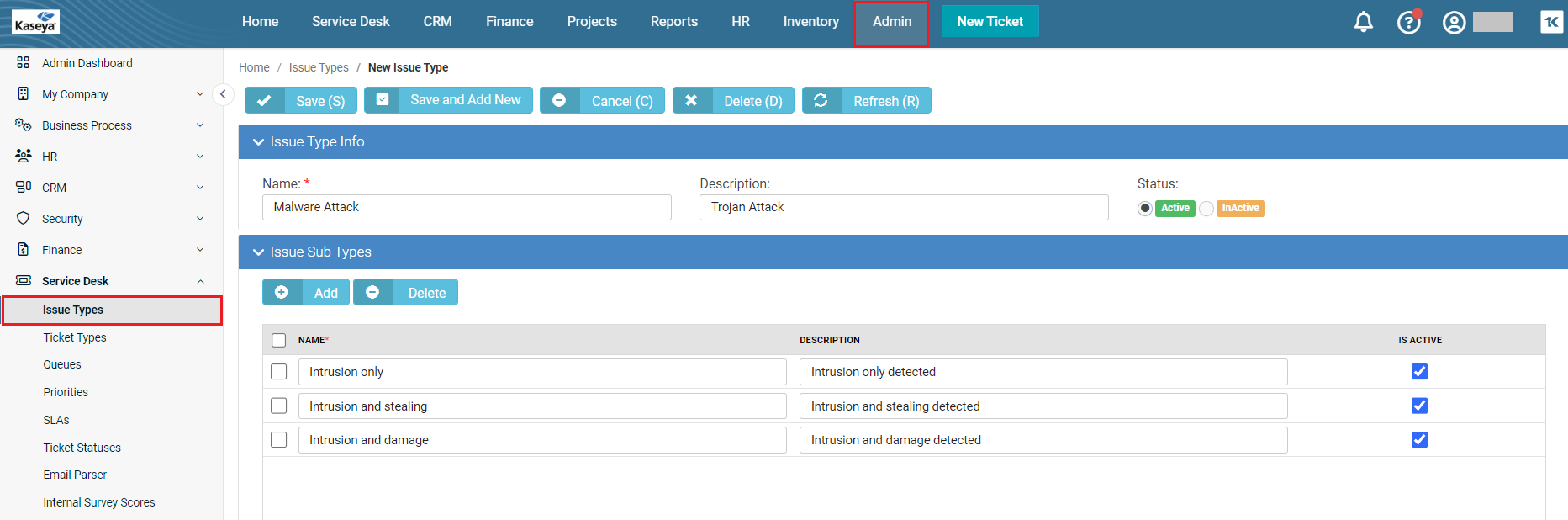
Click New. The New Issue Type page opens.
-
Name: Enter an appropriate name for the issue type.
-
Description: Enter a brief description.
-
Status: By default, Active is selected. If you want the issue type to be inactive at the moment, click Inactive.
-
At this point, you can either click Save and save the issue type or proceed further and add an issue sub type. If you click Save, the issue type will be saved and added to the existing list of issue types in the Issue Types listing page. If you want to create an issue sub type, click Add.
-
Name: Enter an appropriate name for the sub issue type.
-
Description: Enter a brief description.
-
Is Active: By default, Is Active is selected. If you want the issue sub type to be inactive at the moment, uncheck the Is Active checkbox.
-
For adding multiple issue sub types, repeat steps 6 through 9.
-
Click Save. The issue type and the issue sub type are saved. If you want to add another issue type right after this, click Save and Add New. If you want to cancel everything that you have entered and/or selected so far, click Cancel. Clicking Cancel will take you to the Issue Types listing page. To refresh the page, click Refresh on the top.
Editing an issue type (and an issue sub type)
-
Navigate to Admin > Service Desk > Issue Types. The Issue Types page opens.
-
Click the issue type that you want to edit. The Issue Types page opens in edit mode.
-
If you want to make changes to the issue type, navigate to the Issue Type Info section. If you want to make changes to the issue sub type, navigate to the Issue Sub Types section.
-
Click Save. If you want to cancel everything that you have entered and/or selected so far, click Cancel. Clicking Cancel will take you to the Issue Types listing page.
Deleting an issue type (and an issue sub type)
-
Navigate to Admin > Service Desk > Issue Types. The Issue Types page opens.
-
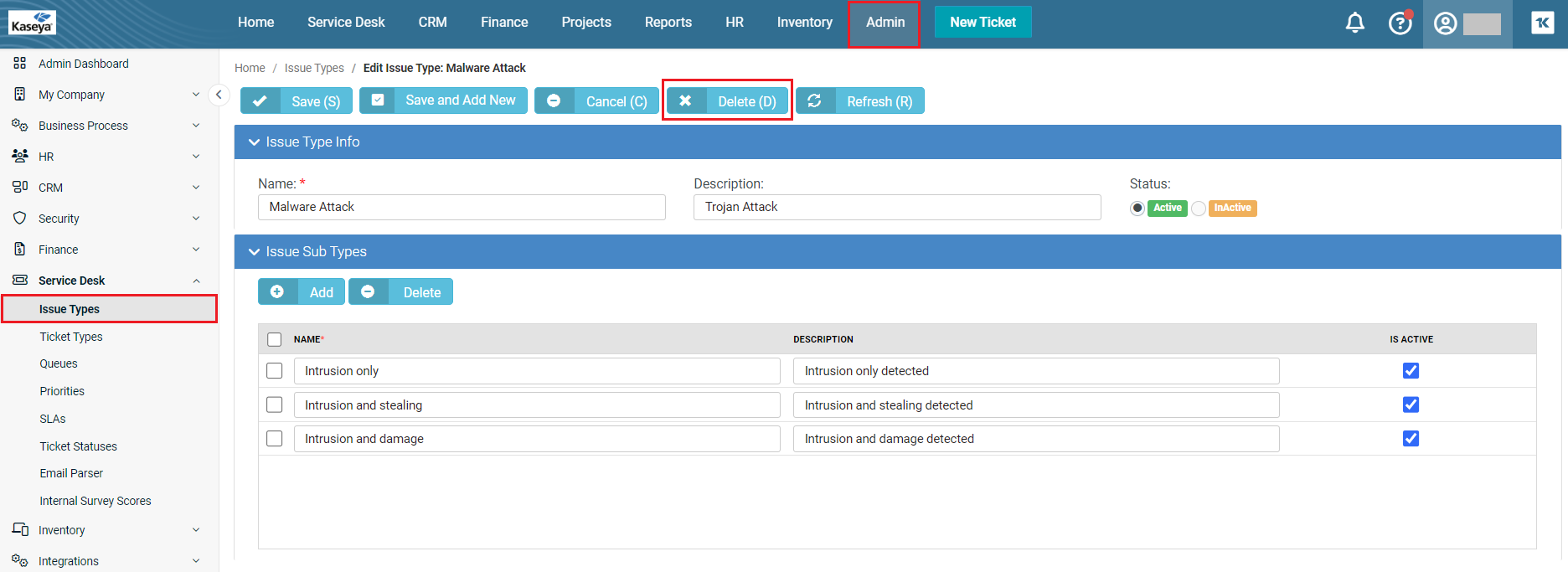
Click the issue type that you want to delete. The Issue Types page opens in edit mode.
-
Click Delete on the top. BMS asks for confirmation.
-
Click Yes. The issue type is deleted.
IMPORTANT Remember, if you delete the issue type, all issue sub types will also be deleted.
-
If you want only a issue sub type or only multiple issue sub types to be deleted, click the relevant checkboxes to the left of issue sub types and then click Delete on top in the same section. If you want to delete all the issue sub types at the same time, click the checkbox next to the Name column in the header area of the Issues Sub Types section and click Delete on top in the same section. BMS asks for confirmation.
-
Click Yes. The issue sub types are deleted.
-
Click Save.
IMPORTANT If you do not save after deleting an issue sub type, it will reappear when you open the same page again. So, make sure you click Save after deleting an issue sub type or multiple issue sub types.

Saving a customized view
The grid that you see beyond the search area shows the default view; however, you can customize a view and save it. You can then click the saved view and the grid will show the customized view with selected columns.
-
Navigate to Admin > Service Desk > Issue Types. The Issue Types page opens.
-
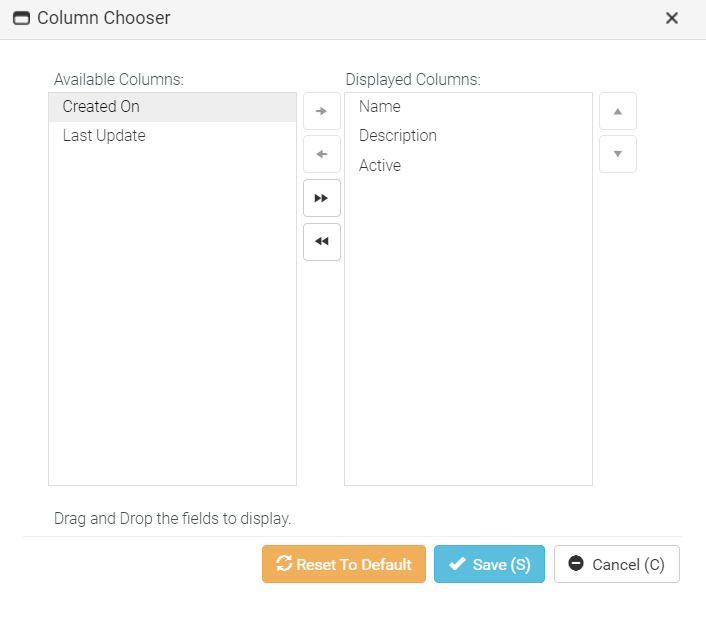
Click the Column Chooser (open book) icon which is next to the settings icon. The Column Chooser window opens.
-
Select as many columns from the left and click the right arrow or just slide them to the right.
-
Click Save. The additional columns will now appear in the grid.
-
Click the sprocket (settings) icon and then click Save As.
-
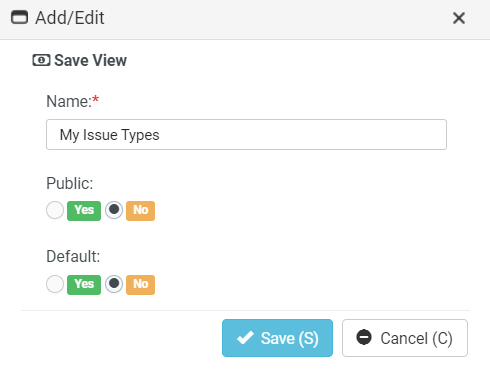
Enter a name for your customized view.
-
Public: Click Yes or No according to your choice. If you select Yes, the view will be made public. If you select No, the view will be made private.
-
Default: Click Yes or No according to your choice. If you select Yes, the view will be made the default view. If you select No, the view will not be made the default view.
-
Click Save. You will now see that the name of the view has been added to the Views dropdown.
Sharing a customized view
You can share your custom view with others. Once you create a custom view, other options will appear as dropdown in the settings icon.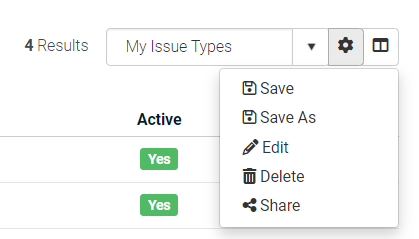
-
Navigate to Admin > Service Desk > Issue Types. The Issue Types page opens.
-
Select the view from the view dropdown.
-
Click Share. The Share View window opens. You will see two tabs - Queues and Employees. The Queues tab is open by default. You can use one of the tabs or both the tabs.
-
Queue: Select a queue from the dropdown and click Add. The queue is added to the list below.
-
Click to select the relevant checkboxes.
-
Click Save.
-
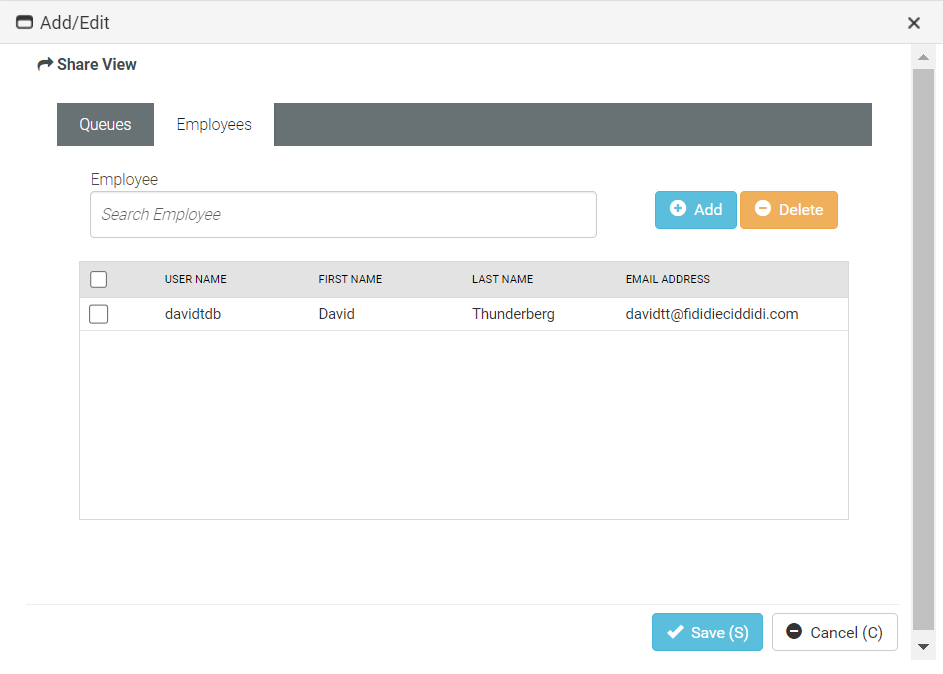
If you wish to share the view with certain employees, go to the Employee tab.
-
Employee: Enter the first few letters of the employee. The employee name appears.
-
Click Add. The employee name is added to the list below.
-
Click to select the relevant checkboxes.
-
Click Save. The customized view is shared with the selected employee. If you want to cancel everything that you have entered and/or selected so far, click Cancel. Clicking Cancel will take you to the Issue Types listing page.
Exporting the grid
You can export the grid as an Excel file. The grid might contain several pages in some cases depending on the number of issue types that you have created. You can export the current page or all the pages together as an Excel file.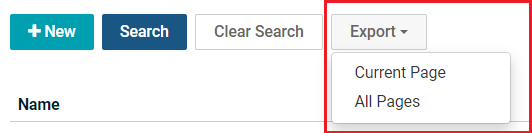
-
Navigate to Admin > Service Desk > Issue Types. The Issue Types page opens.
-
Click Export > Current Page or All Pages.
-
In the Save As window, enter an appropriate file name.
-
Click Save. You will see a downloaded Excel file at the top right corner of your browser. This file contains tabular data from the grid.



